Grandstand or Course Walk: Two Ways to Read a Racecourse
Grandstand or course walk? Compare a fixed overview with shifting trackside views to choose a racecourse visit that fits your interests, pace, and plans.
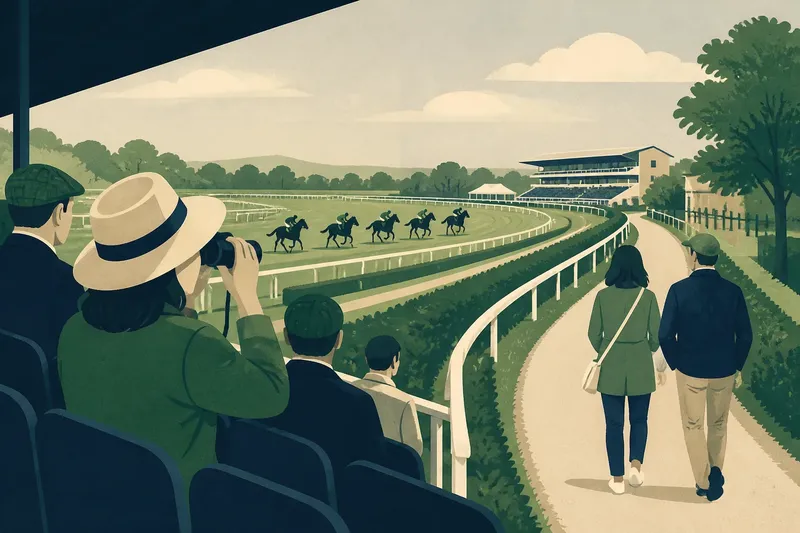
You settle into a grandstand seat as the runners turn toward the straight, and the field opens into view. Later, from a path beside the course, that stretch feels closer but less complete. Choosing a grandstand or course walk is really choosing how you want to read a racecourse.
One option gives you a steady map of the action; the other changes the map as you move. Neither is universally better. Each makes different parts of the venue easier to notice and asks something different of your attention.
What does a grandstand reveal?
From a grandstand, you can follow the course as a connected shape. Turns, straights, rails, and the gaps between runners are easier to understand when much of the route sits in one frame. That overview can help if you are new to a venue or want to follow how a race develops.
A fixed position also helps you keep your bearings. You can watch the field pass one landmark, then turn your attention to another visible section without walking through a busy public area. If you want to compare the movement of the whole group rather than focus on one detail, the elevated view often makes that simpler.
The trade-off is distance. From a seat, a rail or bend may look like a clean line, while the scale and texture of the place remain less apparent. People, structures, and the stand’s angle can also block part of the view. A grandstand is like a map on a table: useful for seeing how things connect, but not the same as standing on the ground.
What changes on a course walk?
Walking around accessible public areas replaces one broad view with a sequence of smaller ones. A stretch that seemed straightforward from above may feel longer at track level; a bend may conceal what comes next. You notice changes in slope, the rail’s curve, how paths meet, and how the course sits among buildings or open space.
Movement turns the visit into a more physical way of reading the venue. A view appears, slips behind a structure, then returns from another angle. That shifting perspective can make the place memorable even if you do not follow every part of the racing action from one spot.
There is a practical cost: walking takes attention and energy, and a path may not provide a clear view of the track. You may need to pause, share narrow spaces, or accept that a section is out of sight. Stay within public areas and follow posted directions; access and viewing rules differ by venue.
Which view suits your visit?
A grandstand tends to suit someone who wants to follow the race as a whole, keep a familiar base, or spend less time moving between viewing points. It can also help companions find one another again, provided they agree on a meeting place.
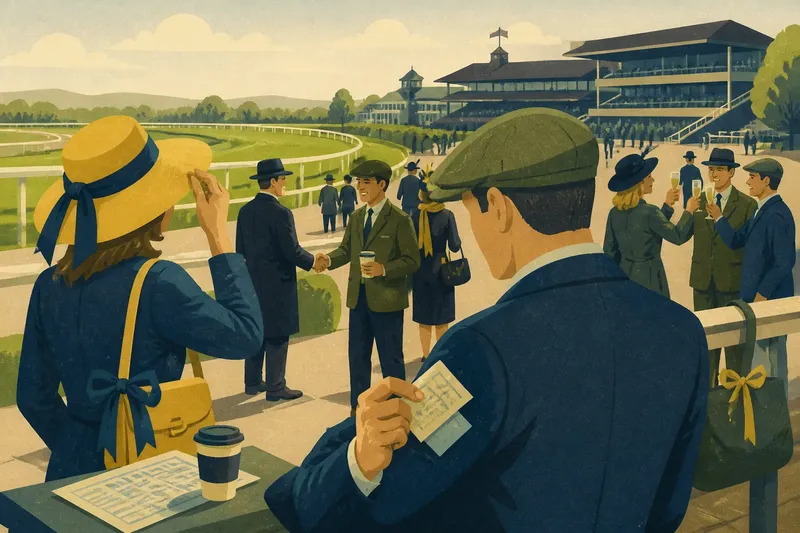
A course walk suits a curious visitor who enjoys noticing how a place is put together. It may appeal if you would rather explore at your own pace than remain in one seat, or if the layout itself is part of what you came to see. You do not have to cover the entire venue; even a short stretch can show how the track changes from one angle to the next.
If you are unsure, use both approaches without trying to do everything. Choose a grandstand position for the broad view, then walk at a quieter moment and see which features become clearer at ground level. This gives you a direct comparison without turning the day into a race against the clock.
How do the two approaches change what you notice?
Can you see the whole course from a grandstand?
Not always. A stand may overlook the main straight while leaving a turn or part of the back of the course out of sight, so check the venue map and the view from public seating.
Does a course walk make the layout easier to understand?
It helps you experience distances and transitions from the ground, but it can be harder to connect separate sections into one complete route. The overview and the walk answer different questions, so neither entirely replaces the other.
What if you want to follow the racing and explore?
Make one location your main viewing point and treat the walk as a separate part of the visit. That way, you can enjoy changing perspectives without constantly trying to keep up with both the action and your route.
Should you choose based on your companions?
Yes, if your group has different preferences or mobility needs. A fixed meeting place may make a grandstand easier to share, while a walk can suit companions who like to pause and look around. Agree on a comfortable pace and a specific public meeting point beforehand; if the group would rather stay together with fewer stops, choose the grandstand as your base.
How can you choose before arriving?
Start with the kind of attention you want to give the venue. If you want to trace the action across the course, look for a public viewing area with a clear view of the sections you care about. If you want to understand the ground, identify an open route that passes different vantage points.
Then consider the shape of the day: how much walking feels comfortable, whether you prefer to stay with companions, and whether you would rather watch from one dependable place or follow your curiosity. Check the current venue map and visitor information for public routes, viewing access, and restrictions. Those details can affect which option is available.
Imagine you arrive wanting both a clear sense of the race and a feel for the setting. You check the venue map, choose a grandstand with a view across the straight as your base, and take a short public-path loop before settling in. The stand gives you a broad view of the route; the walk lets you notice ground-level details that the seat concealed. If the map shows no accessible public loop, you can skip the walk and spend the visit at the stand instead.
For a first visit, choose the option that matches your main reason for being there: perspective or exploration. Keep that intention in mind, and grandstand or course walk becomes an easy decision rather than a test of how much ground you can cover.
A racecourse is easier to remember when you leave with one detail you can place: the straight as it appeared from above, or the curve of a rail encountered on foot. Notice where your understanding changed. That small observation can help you choose a grandstand or course walk for your next visit.