The Myth That Every Race-Day Tradition Is Ancient
Race-day traditions need not be ancient to matter. Learn how customs are renewed, shared and made personal, and how to join in without pretending.
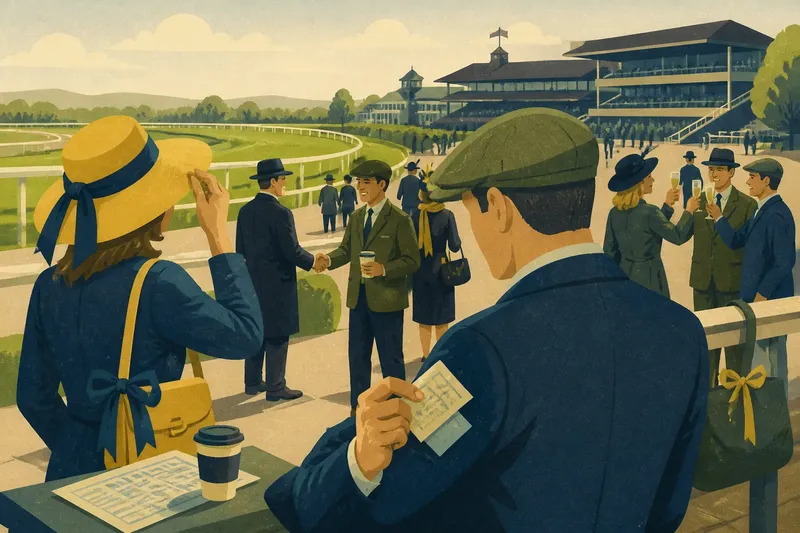
A fan folds a racecard into a neat square before putting it away; another keeps a bright hat for the same spring meeting each year. These small habits are race-day traditions, even if neither has been handed down through generations. The myth that every race-day tradition is ancient can make ordinary acts seem less meaningful than they are.
At the track, custom often takes shape in plain sight: a familiar greeting at the gate, a favorite place to meet friends, a toast after the last race. Some practices have long histories, while others are renewed, adapted or invented by the people who return. Their age tells only part of the story.
What makes a race-day tradition feel old?
Repetition gives a ritual the texture of age. A group might meet by the same rail, order the same snack or wear a particular color each time they gather. After a while, newcomers see a settled custom and may assume it has always belonged to the venue.
That impression can be reinforced by the setting. A grandstand, a historic-looking entrance or a racecourse’s established vocabulary lends weight to the day. Yet a tradition may be recent even when it unfolds in a place that carries older memories.
It helps to distinguish a venue’s history from a crowd’s habits. A course can be old while a particular pre-race toast is new; a family custom can outlast a favorite meeting place. The setting and the ritual may overlap without sharing the same age.
How do customs get renewed?
Traditions are not museum pieces. They shift as people return, as groups change, and as practical details alter the day. Someone brings a new ritual into an existing gathering; others adopt it because it feels right, not because they have been told it is historic.
Even longstanding customs are often renewed through small choices. A family may keep a ritual but change its form: the old paper keepsake becomes a photograph, or a toast moves from a private room to a meeting point outside. The continuity lies in what the act means to the people doing it, rather than in an unchanging script.
Say a group of friends starts meeting beside a particular sign before the first race because it is easy to find. One season, a new member brings a small ribbon in the group’s chosen color, and they tie it to a bag handle as a marker. If they keep repeating the gesture, the expected observable result is a recognizable shared cue; it can become a tradition without anyone claiming it is ancient.
Does a custom need a long history to matter?
No. A tradition’s value can come from recognition, welcome or memory. When someone says, “We always do this together,” the “always” may mean since the group began—not since the course opened.
That distinction matters because age can become a gatekeeping test. A visitor who has never heard of a ritual may feel they are missing a rule or a piece of insider knowledge. Most informal customs are easier to join when people explain them plainly and leave room for others to take part in their own way.
Think of a well-used kitchen mug: it is not valuable because it is old or rare, but because people know whose it is and reach for it without asking. A race-day ritual can work similarly. Its significance grows through shared use, not through a grand claim about its origins.
Which small rituals can you notice?
Rather than asking whether a custom is “authentic,” look at how it works for the people gathered around it. These field notes can help you read the crowd without turning every gesture into a historical claim:
- A meeting point: Notice whether friends gather by a particular gate, sign or landmark. The habit may be about making the group easy to find, and that practical purpose can be part of its appeal.
- A repeated greeting: Listen for familiar words exchanged between regulars. A phrase can be a private joke, a welcome or simply a way of marking that the day has begun.
- A shared color or accessory: Look for hats, scarves, badges or ribbons that connect people without requiring a formal uniform. Ask whether it is a group choice before assuming it has a venue-wide meaning.
- A moment of remembrance: Some people pause before a race or raise a glass afterward to remember a person or horse important to them. The meaning may be personal, and respectful curiosity is better than demanding an origin story.
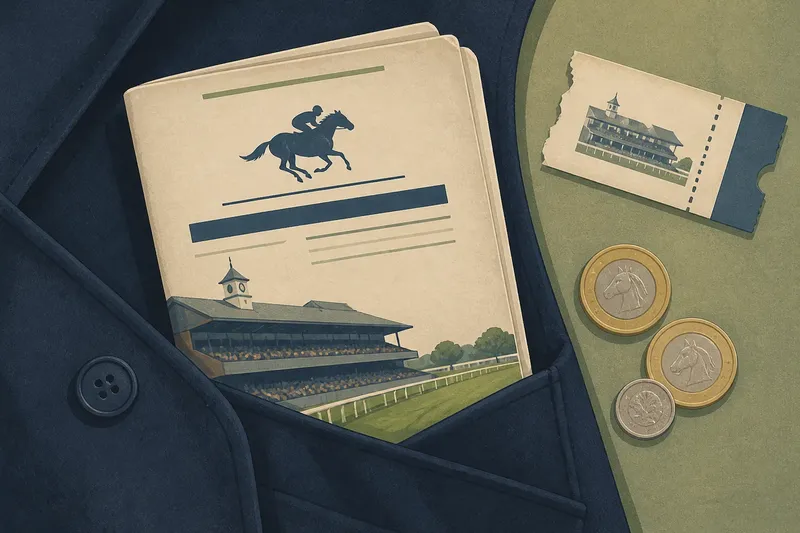
- A keepsake habit: Someone may save a card, ticket or photograph from a meeting. The object can serve as a marker of time with companions, rather than evidence of a long-established custom.
Observation is not the same as interpretation. A repeated gesture may look ceremonial to an outsider and still be a convenient arrangement, a private joke or a way to recognize friends. If its meaning is unclear, a light question—“Is that something your group does every meeting?”—usually leaves room for an honest answer.
How can you join a tradition without assuming its story?
Start by following the people who are already part of it. If a group raises a glass, for example, you can wait to see whether they invite others in. If you are unsure, ask what the gesture means to them rather than where it “really” began.
Leave space for different versions. One family may wear a particular color; another may mark the day with a shared snack or a photograph outside the stands. Neither has to represent every racegoer. A tradition can be meaningful to a small circle without becoming an official custom of the whole course.
It is also fine to make a personal ritual quietly. You might choose a certain badge for race days, save a note about who came with you, or take a moment to look back at the grandstand before leaving. A practice becomes yours through repetition and intention; it does not need an audience or a formal name.
What should you ask about a race-day custom?
How can I tell whether a tradition is official?
Look for the difference between a venue-led ceremony and a habit shared by a family or group. If the distinction affects access, participation or conduct, check the course’s current guidance rather than relying on what one person assumes.
Is it rude to ask how a custom started?
A curious, low-pressure question is usually a considerate way to learn. Ask what it means to the person or group, and accept a brief answer if they would rather keep it private.
Can a personal habit count as a tradition?
Yes, if you return to it and it helps mark the occasion for you. It may be personal rather than shared, but that does not make it less real or less useful.
Should I copy a ritual I see at the track?
Pause and read the situation before joining in, especially if the gesture seems private or connected to remembrance. A quick question can clarify whether it is open to others and what participation means.
How do you talk about a custom honestly?
Use language that matches what you know. “Our group has done this for years” describes a lived habit without making a claim about the whole venue. “This is a familiar custom here” leaves room for variation, while “everyone has always done it” can turn a small practice into an unsupported story.
If someone offers a neat origin tale, treat it as a story unless there is a reason to establish more. People often repeat explanations that make a ritual feel satisfying; the emotional point can remain true even when the details are uncertain. You can enjoy the account without presenting it as settled history.
This is especially helpful when different generations or groups remember a custom differently. Rather than forcing one version to win, notice what each person associates with it: a friend, a favorite meeting, a particular day. Those memories explain why a practice persists, even when its exact starting point is hard to pin down.
Why does age matter less than care?
A race-day tradition does not need a claim of great age to deserve attention. What matters is whether it helps people feel connected, marks a moment they value or makes a shared day easier to recognize. Those functions can belong to a newly adopted gesture as readily as to a custom remembered across generations.
So when you notice a repeated act, let it be what its participants say it is. Join with care if invited, make your own ritual if that suits you, and resist polishing an uncertain origin into a grand legend. That keeps race-day traditions honest—and leaves room for the next small custom to begin.