Why the Paddock Changes the Pace of a Race Day
See how the racecourse paddock reveals pre-race routines, horse handling, and the movement toward the start, so you can follow the meeting with sharper context.
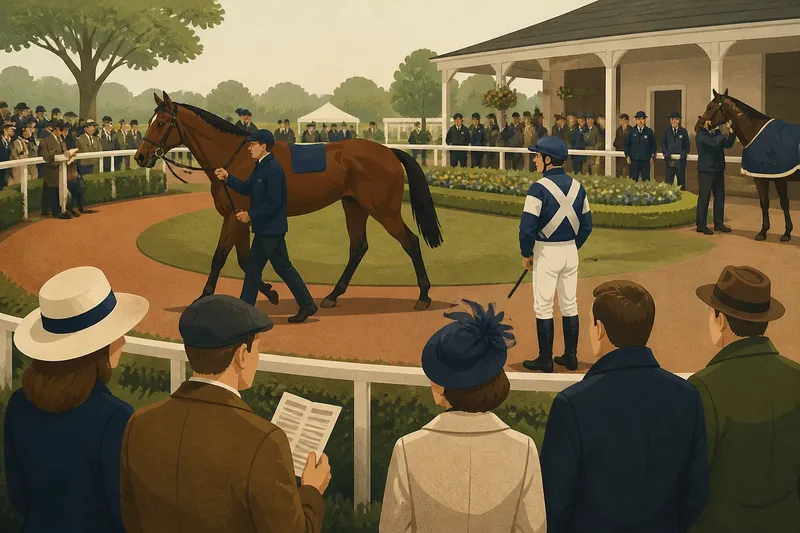
At the racecourse paddock, a groom guides a horse around the ring while a jockey waits nearby and spectators study the preparations. The scene offers more than a quiet interval: it shows how a race moves from stable routine to public event. Watching those details can give the next race a richer context without turning the paddock into a place for confident predictions.
What does the paddock reveal about a race?
The paddock is where spectators can see the pre-race procession at close range. Horses are brought into view, handlers lead them around, and jockeys prepare to ride. The sequence connects the unseen work of race day with the moment when the field heads toward the course.
It is also a setting with its own social customs. People make room at the rail, keep an eye on the horses, and watch for signals that the group is moving on. The paddock is less like a waiting room than a theater backstage: you see preparations, but not the performance itself.
Access, timing, and rules vary by racecourse. Follow local signs and announcements, stay behind barriers, and leave handlers a clear path.
How can you watch the horses and their handlers?
Choose a spot where you can see without blocking others, then watch the whole ring before picking out one horse. Notice its walking rhythm, how it carries its head, and whether its movement appears settled or restless. These are visible details, not a reliable forecast of what will happen in the race.
Look at the handler’s work, too. A groom’s steady pace, a hand on the lead, or a careful adjustment in direction can show how the horse is being guided through a busy setting. Give the pair room, and do not reach over a barrier or call out to attract a horse’s attention.
Then follow the sequence around the ring: a jockey may arrive, mounting may take place, and staff may guide horses toward an exit. Those actions mark the transition from inspection to the next stage of the meeting. They also explain why the crowd’s focus can shift quickly.
What should you notice beyond the horses?
The paddock offers a view of racing’s working roles as well as its athletes. Pay attention to how staff coordinate movement, where entrances and exits sit, and how spectators respond when a horse is led away. This makes the scene easier to understand even if you do not follow form or know every racing term.
Clothing and equipment may also draw your eye: a jockey’s silks, a saddle being prepared, or a lead being handled carefully. Treat these as parts of the meeting’s routine rather than clues that reveal a certain result. A racecourse visit includes ceremony and practical work side by side.
How do you follow paddock etiquette and timing?
Keep the viewing line open, speak quietly when people nearby are watching, and avoid stepping into a passage or standing where staff need to move. If you want a longer conversation about the race card, move away from the rail. Check venue announcements so you can follow the designated route when horses leave.
- If the barrier is marked as restricted, stay on the public side; if the boundary is unclear, ask an official before moving closer.
- If a passage leads to an entrance or exit, keep it clear; if you need to pause, move to an open area away from the route.
- If a horse is approaching your position, give it and its handler space; if the rail is crowded, step back rather than squeezing forward.
- If an announcement directs spectators toward the course, follow the stated route; if you missed the instruction, check with staff instead of crossing against the crowd.
- If you cannot see from your current position, wait for a safe opening or choose another public viewing spot; if neither is available, leave the ring without pushing through.
- If a longer discussion is making it hard for others to watch, move away from the viewing line; if your group cannot regroup there, agree on a nearby open meeting point.
What does a useful paddock visit look like?
Say you arrive at the ring with a race card, a friend, and a plan to follow one named runner. You first check the venue signs, stand behind the public barrier, and watch the horse for a circuit without stepping into the handler’s path. Next, you note its walking rhythm and the jockey’s arrival, then follow the official route when the horses leave. The result is a clear sequence to carry into the race: you saw the runner being handled and prepared, while leaving its eventual performance an open question.
If your interest is more in the people than a particular horse, follow how staff guide the group and how the crowd makes room. Either focus gives the paddock a distinct purpose: it lets you see the small acts of preparation that a view from the grandstand cannot show as closely.
What do spectators ask about the racecourse paddock?
Do I need to understand racing form to enjoy the paddock?
No. You can follow the horses’ movement, the handlers’ routines, and the transition toward the course without assessing a runner’s chances. If you do study form, treat what you see in the ring as one observation, not a prediction.
Can I photograph horses in the paddock?
Follow the racecourse’s photography rules and any directions from staff. Keep your device from blocking other spectators, and avoid using a flash or making noise near horses.
What should I do if the paddock is crowded?
Stay in a public viewing area and do not push toward the rail. Look for another permitted position or leave the ring if the crowd makes it difficult to move safely.
How do I know when to leave?
Listen for announcements and watch for staff guiding horses toward the exit. Move along the designated route while there is room, rather than waiting until the passage becomes congested.
The racecourse paddock makes a race meeting more legible by showing the work and choreography that happen before the start. Carry one specific observation—perhaps a handler’s careful turn or the moment the jockey arrives—into your view of the race. It will not tell you who wins, but it can help you recognize how the meeting reached the starting point.